

Jonathan F. Kominsky and Elizabeth Bonawitz examine the public’s judgments of Covid-19 safety measures during one of the pandemic’s peaks. Their research project, funded by the SSRC’s Rapid-Response Grants on Covid-19 and the Social Sciences, created hypothetical scenarios to explore whether the provision of different kinds of information shaped how people viewed responses to negative events (such as public health crises). The authors found that a judgement of overreaction was typical under most scenarios and, moreover, such judgements strongly predicted whether a person followed Covid-19 measures.
Starting with SSRC president Alondra Nelson’s reflections on “Society after Pandemic,” this series of essays explores the human, social, political, and ethical dimensions of Covid-19. These pieces call attention to how social research can shed light on the short- and long-term effects of the pandemic and what can be done to improve responses, both now and in the future.
The publication of this series would not be possible if not for the help of the following SSRC staff:
Juni Ahari, communications and editorial assistant.
Cole Edick, program associate, Anxieties of Democracy and Media & Democracy programs.
Carrie Hamilton, program assistant, Social Data Initiative and Media & Democracy program.
Saarah Jappie, program officer, Transregional Collaboratory on the Indian Ocean.
Michelle Lee, program assistant, International Dissertation Research Fellowship.
Line Sidonie Talla Mafotsing, communications and editorial assistant, African Peacebuilding Network and Next Generation Social Sciences in Africa.
Daniella Sarnoff, program director, International Dissertation Research Fellowship.
Catherine Weddig, program assistant, Social Data Initiative and Media & Democracy program.
Themes
Essays


Society after Pandemic

“Public”: A Pandemic Diary of a Future Idea
by Mike Ananny
Mike Ananny discusses “how the pandemic has shown how an everyday word like ‘public’ actually contains myriad assumptions about why and how to live together.” Ananny argues that as “public life”—both as concept and practice—has been destabilized under Covid-19 conditions, we witness how the conventional notions of a “public sphere” has always limited our understanding of “public” and diverted attention from the inequalities that underpin it. At the same time, public life during the pandemic has revealed multiple examples of social connection and mobilization that broaden the scope of “public” in ways that imagine “what public life could be like.”

Covid-19 Fieldnotes from Our Grantees
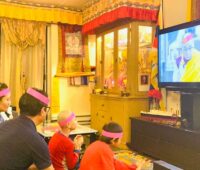
Negotiating Invisibility at the Epicenter: Himalayan New Yorkers Confront Covid-19
by Sienna R. Craig, Ross Perlin, Nawang Tsering Gurung, Maya Daurio, Daniel Kaufman and Mark Turin
Through audio diaries and interviews, former SSRC fellow Sienna Craig and her collaborators chronicled the experiences of Himalayan New Yorkers during the pandemic. Many Himalayans live in central Queens, the epicenter of the Covid-19 outbreak in New York City. This essay shares the many challenges faced by the Himalayan community, not least their struggle to be seen as a “community” with its own needs. But it also emphasizes the responses of Himalayans in terms of collective self-help and making claims on city government for attention and essential services.

Covid-19 in East Asia

Use of Personal Data in Tackling Covid-19 in East Asia: Establishing Robust and Reliable Data Governance for the Social Good
by Masaru Yarime
As the Covid-19 pandemic spread across the globe, experts used models to project future developments and to advise on effective policy choices to control the spread of disease. Here, Masaru Yarime discusses the role personal data plays in tracking and modeling Covid-19 projections in Asian countries, the regulations regarding data collection in different Asian countries, and the restrictions on sharing data across national borders. Though Yarime focuses on Asia, his examination of modeling processes and the clash between the need for vast volumes of data and the legitimate privacy expectations of individuals are not just an Asian concern but are broadly relevant.

Covid-19 Fieldnotes from Our Grantees

Impact of Perspective-Taking Exercises on Mobilizing for the Release of Inmates in a Pandemic
by Mackenzie Israel-Trummel
Mackenzie Israel-Trummel’s SSRC Covid-19 rapid-response research grant focused on advocacy on behalf of the incarcerated, who are among those groups most at risk during the pandemic. Here Israel-Trummel reports on the sources of empathy and advocacy for prison inmates through experiments in perspective-taking. She finds that, when people are prompted to imagine themselves or a loved one as a prisoner, empathy and (potentially) political action are more likely to follow.

Social Research and Insecurity

Resuming Field Research in Pandemic Times, Redux: A View from Inside a “Research Reactivation” Committee
by Douglas Rogers
In a follow up to his earlier coauthored piece on resuming research during the Covid-19 pandemic, Douglas Rogers describes how Yale University created a process to review and approve research projects through “a researcher-facing, education-focused, peer-reviewed process that is informed by public health guidance.” Avoiding blanket policies restricting or banning research, Rogers explains the steps taken by Yale, and the subcommittee he chaired in particular, to ensure a safe resumption of field research, which can hopefully guide other institutions.

Covid-19 Fieldnotes from Our Grantees

When the Past Becomes Present: A Legacy of Anti-Asian Hate
by Jennifer Lee
Jennifer Lee deploys her research on anti-Asian hate during the pandemic to shed light on the tragic March 2021 mass shooting in Atlanta, and as an entry point into the historical roots of violence toward Asian-Americans. Lee reports on increased violent incidences and the strong sense of threat experienced by Asian Americans. To understand this, she argues that we need to look beyond the rhetoric of the Trump administration that cast blame on Asians for Covid-19 and consider longer-term structural dimensions of racism and dehumanization of non-white Americans.

Covid-19 in East Asia

Disaster Management in Japan during the Covid-19 Pandemic: Were the Lessons Learned from Large-scale Natural Disasters Applied?
by Mampei Hayashi
Sitting on the edge of the Pacific Ocean, Japan is one of the “ring of fire” countries subject to frequent earthquakes and other natural disasters. In this essay, Mampei Hayashi provides a critical examination of the Japanese government’s disaster management policies to address the Covid-19 pandemic, arguing that the government has wavered, switching between policies to suppress the pandemic and policies to stimulate the economy. Hayashi advises use of the Disaster Management Cycle to plan and implement a more coherent set of policies to not only deal with the immediate emergency, but also to develop plans for recovery and mitigation of similar future disasters.

Mediated Crisis

Media Infrastructure Is and Has Always Been a Matter of Life and Death
by Jacqueline Wernimont
Popular discourse over the course of the Covid-19 pandemic has emphasized its “unprecedented” nature, but a deep history of public health crises communication informs how this current crisis is understood and experienced by the US public. Jacqueline Wernimont explains how messaging around life and death at scale have always been mediated by statistics and communication technologies, and explores the consequences of current failures in that mediation.

Covid-19 in East Asia

Japan’s Covid-19 Strategy
by Haruka Sakamoto
Haruka Sakamoto examines Japan’s strategy for dealing with Covid-19, which, unlike the strategies chosen by other nations, has used only limited PCR testing and made little use of IT methods for tracking those who might have encountered infected individuals. Based on her years of experience working for the Japanese Ministry of Health, Labor, and Welfare as well as serving as a consultant for the WHO, the Gates Foundation, and the World Bank, she presents an inside view of Japanese policymaking and the legal framework and constraints that have shaped Japanese strategies.